
Unlocking geospatial intelligence with Maps in Microsoft Fabric
News|21 November 2025

Data alone doesn’t drive decisions. It’s context that turns numbers into action. Location intelligence brings that context to life. With Maps in Fabric, organisations can fuse geospatial analytics into their analytics stack, unlocking real-time insights that lead to smarter decisions and measurable business impact.
For technology teams, this isn’t just another feature update. It’s a step-change for industries where location matters - utilities, construction, sustainability, and more. As a Microsoft partner, we help you harness these capabilities to solve real challenges.
Why it matters: solving real pain points
Fragmented mapping workflows, siloed spatial data, and clunky custom imagery have slowed teams down. Scaling insights meant juggling too many tools.
The result? Delays, inefficiencies, and missed opportunities.
Maps in Fabric changes the game. By embedding geospatial capabilities directly into the Real-Time Intelligence workload, you get a single, unified platform for spatial analytics. No add-ons. No workarounds. Just seamless insight.
What’s new in Maps for Fabric?
Microsoft’s latest announcements at Ignite and Fabcon Europe introduce three standout features for solution builders:
- Bring your own imagery
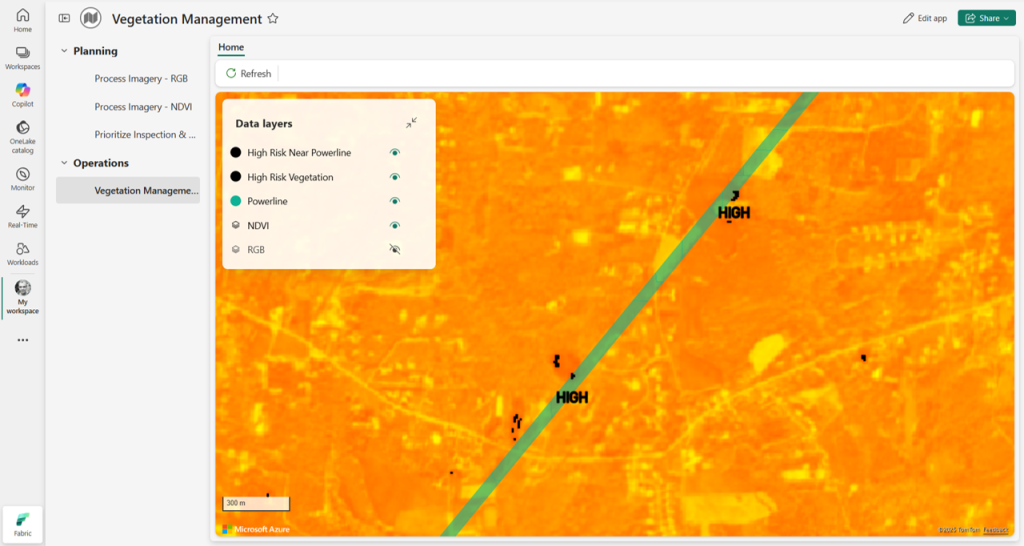
Import OneLake imagery and customer-specific raster datasets directly into Real-Time Intelligence. This means you can use up-to-date, analysis-ready imagery for tailored scenarios like utilities pinpointing high-risk zones, sustainability teams tracking land use, or vegetation management teams identifying where crews should be sent next. No more waiting for generic basemaps; now, your own data drives the insight. - Custom spatial layers
Add points, lines, and polygons with flexible labelling. Visualise assets, risks, and milestones in real time, whether you’re tracking construction progress, monitoring resource allocation, or comparing changes over time to catch delays before they impact the bottom line. Custom labels let you highlight what matters most, making it easier to act on spatial intelligence. - Org Apps integration
Scale mapping workflows across your organisation. Share dashboards, operational insights, and spatial intelligence without friction. With Org Apps, you can deploy mapping solutions at scale, ensuring everyone from field teams to decision-makers has access to the same real-time context. This streamlines collaboration and accelerates response.

Real-world impact
- Resource management
Utilities overlay fresh imagery with asset data to pinpoint outage risks and optimise crew assignments. - Construction monitoring
Weekly site imagery combined with milestone labelling helps identify delays early, keeping projects on track. - Land use tracking
Blend vegetation and land cover data with asset portfolios to support sustainability reporting and compliance.
Ready to explore?
Start experimenting with your own datasets today and discover how spatial intelligence can transform your operations.
As a trusted Microsoft partner, we deliver solutions that unlock the full potential of the Azure Maps ecosystem, from strategy to implementation. Let’s talk about integrating these capabilities into your workflows and delivering real business value.